

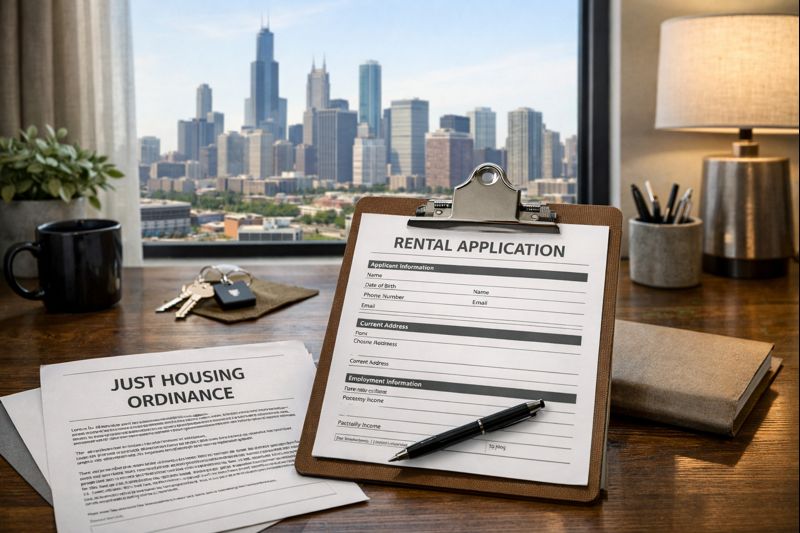
If you’ve rented in Chicago long enough, you know the drill: fill out the application, pay the fee, hold your breath, and hope a background check doesn’t derail the deal. But in recent years, the rules around tenant screening have shifted—and for good reason. Chicago’s Just Housing Ordinance was designed to bring fairness, clarity, and common sense to how background checks are used in rental housing.
As someone who’s watched this city change apartment by apartment, neighborhood by neighborhood, I can tell you this law matters—especially if you’re relocating, rebuilding, or simply trying to understand your rights before signing a lease.
Let’s break it down in plain Chicago terms.
What Is the Just Housing Ordinance?
The Just Housing Ordinance is a Chicago law that limits how and when landlords can use criminal background checks when evaluating rental applicants.
Before this ordinance, it was common for landlords to reject applicants automatically for almost any criminal history—no context, no time limits, no second chances. Just Housing changed that.
The Core Idea
Landlords cannot consider criminal history until after they determine you otherwise qualify for the apartment.
In other words:
- Income
- Credit
- Rental history
come first. Background checks come later—and only under strict rules.
Why Chicago Passed Just Housing
Chicago didn’t pass this law in a vacuum. The city saw firsthand how blanket background check policies were:
- Disproportionately impacting Black and Brown renters
- Preventing stable housing for people with old or minor offenses
- Making it harder for working families to move forward
Housing stability reduces crime, improves neighborhoods, and strengthens communities. Just Housing isn’t about lowering standards—it’s about fair evaluation.
How Background Checks Work Under Just Housing
Step 1: Conditional Approval Comes First
A landlord must first confirm that you qualify based on:
- Income requirements (often 2.5x–3x rent)
- Credit score standards
- Rental references
Only after this step can a criminal background check be reviewed.
Step 2: Criminal History Is Limited
Not all records can be considered.
Landlords cannot consider:
- Arrests that didn’t lead to conviction
- Expunged or sealed records
- Juvenile records
- Minor offenses older than a defined time period
Step 3: Individual Assessment Is Required
If a conviction is reviewed, landlords must consider:
- How long ago it occurred
- The nature of the offense
- Whether it relates to housing safety
- Evidence of rehabilitation
Automatic denials are not allowed.
What Landlords Can Still Deny For
Just Housing does not guarantee approval.
Landlords may deny applications for:
- Recent violent felony convictions
- Crimes directly related to tenant safety or property damage
- Failure to meet income or credit standards
- False information on applications
The difference is transparency and process.
Real-World Example: Renting in Logan Square
I’ve seen this play out countless times.
A renter applies for a $1,900 one-bedroom in Logan Square. Credit is solid. Income checks out. Rental history is clean. Five years ago, they had a non-violent conviction.
Before Just Housing? Likely denial.
Now? The landlord must:
- Evaluate the age of the offense
- Assess relevance to housing
- Allow the applicant to provide context
That’s the difference between fairness and a closed door.
Application Fees and Background Check Costs
Typical Chicago screening fees range from:
- $40–$75 per applicant
Under Just Housing:
- Fees cannot be charged until conditional approval
- Background checks must be legally compliant
- Denials must include written explanation
If a landlord collects a fee upfront before qualification, that’s a red flag.
What Renters and Relocators Should Know
If You’re Moving to Chicago
- Not all landlords follow the rules equally
- Corporate buildings tend to be more compliant
- Smaller landlords may need reminders
Ask These Questions Before Applying
- When do you run background checks?
- What screening criteria do you use?
- Is the application Just Housing compliant?
Knowledge saves time, money, and frustration.
Common Myths About Just Housing
Myth: Landlords can’t run background checks at all
Truth: They can—but only at the right time
Myth: Any record means automatic approval
Truth: Serious, recent offenses still matter
Myth: Just Housing only applies to big buildings
Truth: It applies to nearly all Chicago rentals
Why This Matters for the Chicago Housing Market
Chicago is a city of second chances. It always has been.
Just Housing helps:
- Reduce housing instability
- Support workforce mobility
- Create clearer, more ethical rental standards
And frankly, it makes the leasing process cleaner for everyone involved.
Just Housing in Plain English
- Background checks are delayed, not eliminated
- Criminal history must be evaluated fairly
- Automatic denials are illegal
- Transparency is required
- Renters have rights—and leverage
If you’re renting in Chicago, understanding this law puts you ahead of the game.
Visit TourWithAgent.com to schedule curated apartment tours in Chicago with real availability, real pricing, and an expert agent to guide you.
Related articles–
How to Get Approved as a First-Time Renter in Chicago: A Step-By-Step Guide
Guarantors in Chicago: When You Need One & Typical Requirements
What You Need to Rent an Apartment in Chicago: The Ultimate Documents Checklist